


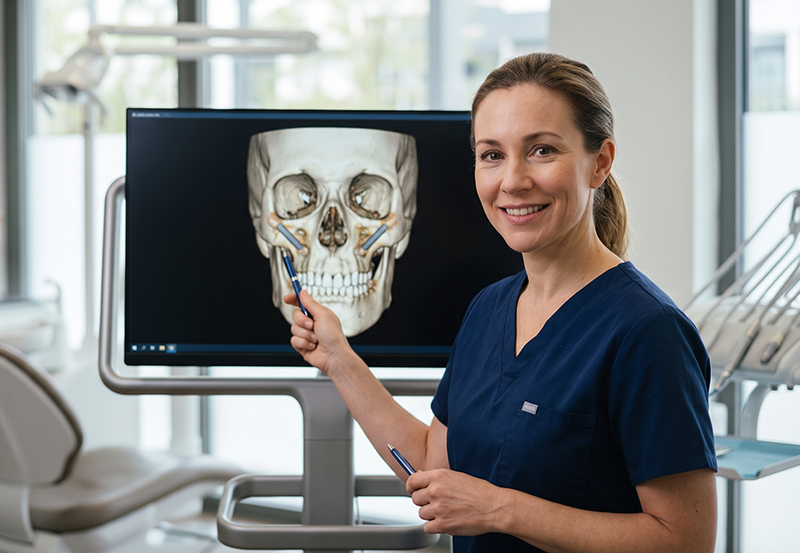
Being told that you don’t have enough bone for dental implants can be disappointing, especially if you have already been dealing with missing teeth or uncomfortable dentures for a long time.
Traditional dental implants need sufficient healthy jawbone for support. When significant bone loss has occurred in the upper jaw, bone grafting may sometimes be recommended before implants can be placed. But for selected patients with severe upper-jaw bone loss, another option may be available, which is zygomatic implants.
Zygomatic implants are longer implants that gain support from the strong cheekbone, known as the zygomatic bone, rather than relying only on the upper jawbone. This can make implant-supported teeth possible in certain complex cases without extensive bone grafting.
Why Does Bone Loss Make Dental Implants More Difficult?
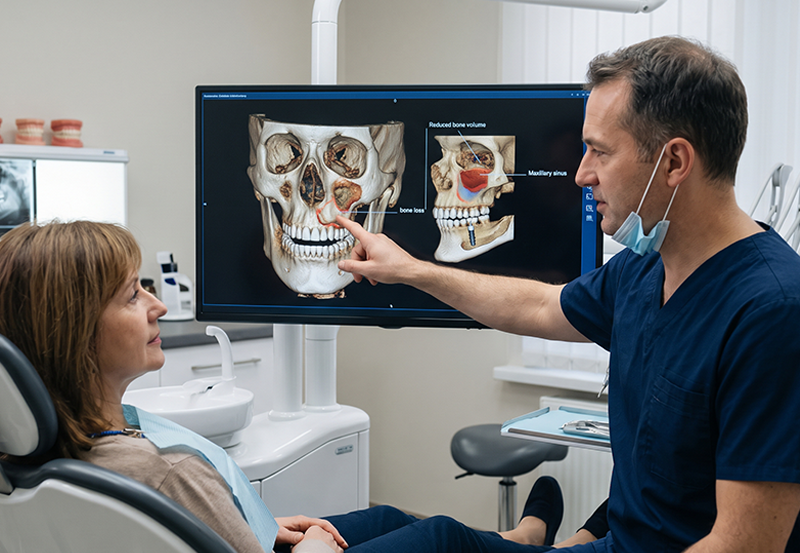 After teeth are lost, the jawbone that previously supported them can gradually reduce in volume. Over time, there may not be enough bone remaining to securely support conventional dental implants.
Bone loss in the upper jaw can be particularly challenging because of the anatomy of the maxillary sinuses and the amount of bone available.
Significant bone loss may occur because of:
– Long-term tooth loss
– Previous unsuccessful implant treatment
– Previous unsuccessful bone grafting
– Trauma or injury
– Certain developmental or anatomical conditions
When there isn’t enough suitable bone for conventional implants, your implant dentist or oral surgeon needs to consider other treatment approaches.
What Are Zygomatic Implants?
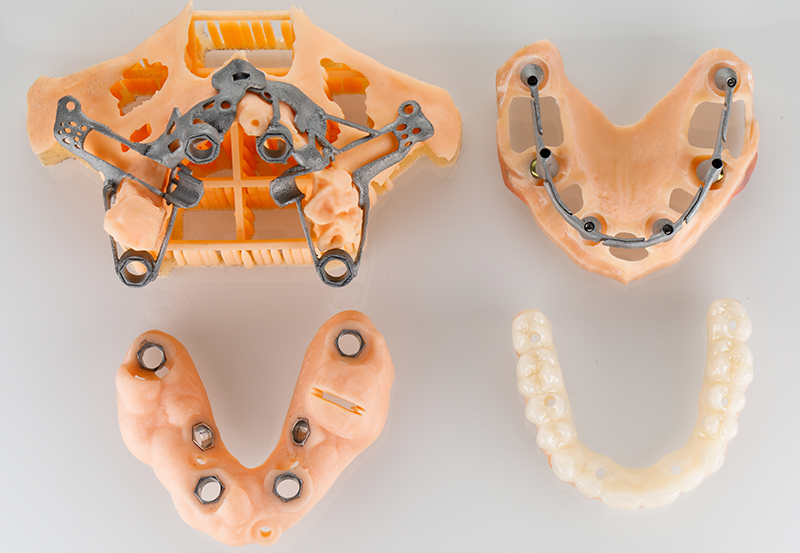 Zygomatic implants are specially designed implants used primarily for patients with significant bone loss in the upper jaw.
Unlike conventional dental implants, which are anchored mainly within the jawbone, zygomatic implants are longer and gain anchorage from the zygomatic or cheekbone.
The cheekbone provides dense, strong bone that can offer support when the upper jaw has insufficient bone for conventional implants.
Depending on the amount and location of your remaining bone, zygomatic implants may be combined with conventional implants. In cases where there is very limited bone throughout the upper jaw, a different configuration involving multiple zygomatic implants may be considered.
Can Zygomatic Implants Avoid Bone Grafting?
In selected cases, yes. One of the main reasons zygomatic implants are considered is that they can provide an alternative to extensive or staged bone-grafting procedures.
With traditional bone grafting, additional bone or bone-substitute material may need to be placed first. A healing period may then be necessary before conventional implants can be placed.
Zygomatic implants take a different approach by using the cheekbone for support.
Potential advantages for appropriately selected patients include:
- Avoiding extensive bone grafting
- Fewer separate surgical stages in some cases
- Providing an implant option despite severe upper-jaw bone loss
- Supporting fixed or removable implant-supported teeth
- Potentially shortening the overall treatment process in suitable cases
However, avoiding bone grafting does not automatically mean that zygomatic implants are the better choice for every patient. The treatment options need to be assessed individually.
How Do We Know If Zygomatic Implants Are Suitable?
A detailed assessment is essential before recommending zygomatic implants.
Your consultation may include a clinical examination and a 3D CBCT scan. This allows the dental team to examine your upper jaw, cheekbones, sinuses and surrounding structures in detail.
Your specialist will consider factors such as:
- The amount and quality of remaining upper-jaw bone
- The anatomy of your cheekbones
- The condition of your sinuses
- Your remaining teeth, if any
- Your bite and proposed final teeth
- Your general health and medical history
- Previous implant or grafting procedures
- Your expectations and preferred treatment approach
After reviewing these factors, your specialist can explain whether conventional implants, bone grafting, zygomatic implants or another treatment approach may be appropriate.
Zygomatic Implants vs Bone Grafting: Which Is Right for You?
There isn’t one solution that is best for every patient with bone loss.
Some people may still benefit from bone grafting followed by conventional implants. Others may have enough bone for alternative conventional implant approaches. Patients with severe bone loss may be assessed for zygomatic implants.
The decision should be based on your individual anatomy, health and long-term restorative needs rather than simply choosing the option that appears faster.
A detailed examination and 3D imaging can help your specialist compare the available options and develop an appropriate treatment plan.
Could Zygomatic Implants Give You Another Option?
 Being told that you have severe bone loss doesn’t necessarily mean you have reached the end of your implant options.
For selected patients, zygomatic implants can provide an alternative way to support implant-based teeth without undergoing extensive bone grafting. However, because this is a complex procedure, careful patient selection and specialist planning are essential.
If you have been told that you don’t have enough bone for conventional dental implants, contact us today at 80037569 to book a consultation with our implant specialists at Dr Joy Dental Clinic. Our team can assess your jawbone using advanced 3D imaging, discuss the treatment options available to you and determine whether zygomatic implants may be suitable for your individual needs.


