


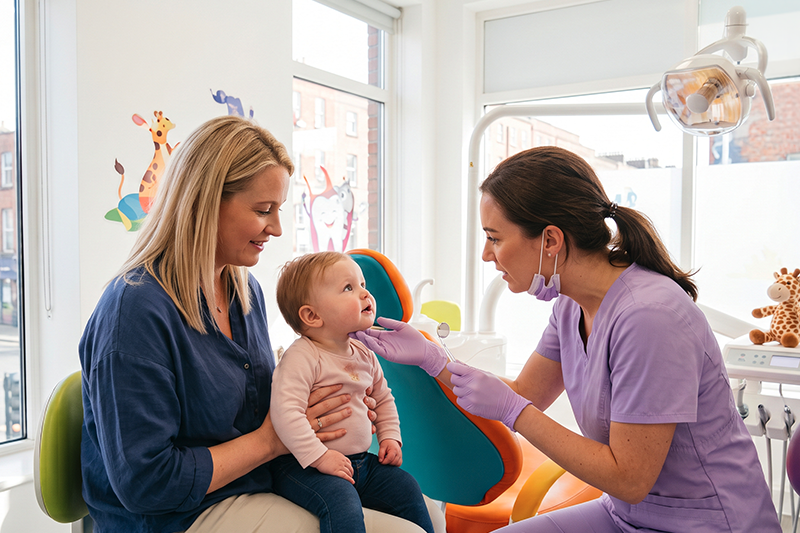
A baby’s first dental visit is an important step for building healthy oral habits from an early age. Many parents wonder when they should take their baby to the dentist, what will happen during the appointment, and whether their baby will be comfortable during the visit or not.
A baby’s first dental appointment is usually focused more on prevention, education, and familiarization than extensive treatment. The dentist will gently examine your baby’s teeth, check the development of the teeth and gums, and discuss ways to protect their oral health as they grow.
What Parents Can Expect
1. A Gentle Introduction to the Dentist
The first visit helps your baby become familiar with the dental environment, dentist, and dental team.
2. A Check of the Gums and Emerging Teeth
The dentist examines the gums, developing teeth, and overall condition of the mouth.
3. Guidance on Oral Hygiene
Parents receive practical advice on cleaning their baby’s gums and teeth and choosing an appropriate toothbrush and toothpaste.
4. Feeding and Oral Health Advice
The dentist may discuss breastfeeding, bottle feeding, pacifiers, snacks, and other habits that can affect dental health.
5. Monitoring Dental Development
The dentist checks whether the baby’s teeth are developing and erupting as expected.
6. Preventive Dental Advice
Parents can learn how to reduce the risk of early childhood cavities and establish healthy habits from the beginning.
The first dental visit is not simply about checking teeth. It gives parents the opportunity to ask questions, understand their baby’s changing oral health needs, and establish a positive relationship with the dentist.
When Should a Baby Have Their First Dental Visit?
The American Academy of Pediatric Dentistry recommends that a child has their first dental visit by their first birthday or within six months of the first tooth appearing, whichever comes first.
Even if your baby only has one or two teeth, an early appointment can be valuable. Dental problems can begin soon after teeth emerge, and early guidance can help parents prevent many common issues.
The first visit also allows your child to become familiar with the dental environment before they require more complex dental care.
Why Is Baby’s First Dental Visit Important?
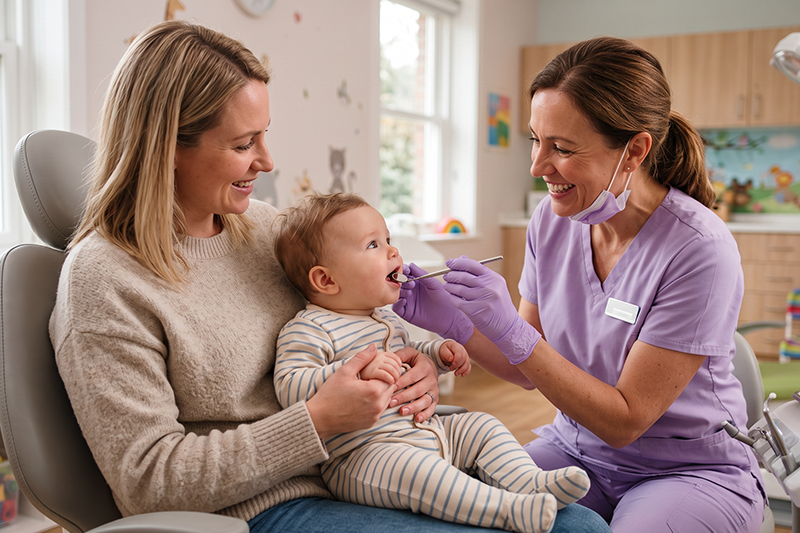 Baby teeth play an important role in a child’s early development.
They help children
- Chew food
- Develop speech
- Maintain space for permanent teeth
- Support normal jaw development
- Develop healthy oral habits
Although baby teeth eventually fall out, keeping them healthy is important for your child’s comfort and development.
Untreated cavities in baby teeth can cause pain, difficulty eating, infection, and other complications. Establishing preventive dental care early can help identify potential concerns before they become more serious.
What Happens During a Baby’s First Dental Visit?
The appointment is usually designed to be gentle, short, and comfortable for both the baby and parent.
Depending on your baby’s age and cooperation, the dentist may
- Review your baby’s medical and dental history
- Examine the gums and teeth
- Check for early signs of tooth decay
- Assess tooth eruption and development
- Examine the bite and jaw development
- Discuss feeding habits
- Discuss pacifier and thumb-sucking habits
- Demonstrate oral hygiene techniques
- Answer parents’ questions
The exact appointment will vary depending on your child’s age, number of erupted teeth, oral health, and individual needs.
Will the Dentist Take X-Rays?
Not necessarily. Dental X-rays are not routinely required for every baby’s first dental visit. The dentist will determine whether imaging is appropriate based on your baby’s age, dental development, symptoms, and individual risk factors.
For a healthy baby with no signs of dental problems, a visual examination may be sufficient. If there is a specific concern, the dentist will explain why an X-ray or other diagnostic procedure may be recommended.
Will My Baby Cry During the Appointment?
It is completely normal for babies to cry or become unsettled during their first dental appointment. A new environment, unfamiliar faces, bright lights, or having their mouth examined can feel unusual for a young child. Crying does not necessarily mean that your baby is experiencing pain or that the appointment has gone badly.
Pediatric dental teams are experienced in working with young children and can use age-appropriate techniques to help them feel more comfortable. The goal of the first visit is also to begin creating a positive association with dental care.
How Can Parents Prepare Their Baby?
 Parents can make the first appointment easier by keeping the experience positive and relaxed.
Before the appointment
- Choose a time when your baby is usually well-rested
- Bring a familiar comfort item if appropriate
- Keep your language positive when talking about the dentist
- Avoid using words such as “pain,” “injection,” or “hurt” unnecessarily
- Bring your baby’s medical and dental information
- Note down questions you want to ask the dentist
Try not to create too much anticipation around the appointment. A calm and positive approach can help your baby feel more comfortable.
What Should Parents Bring to the Appointment?
Depending on the clinic and your baby’s circumstances, parents may want to bring
- Medical history information
- Details of medications or allergies
- Previous dental records, if available
- A list of questions
- A favourite comfort item
- Your baby’s toothbrush, if you would like guidance on brushing technique
If your baby uses a particular pacifier, bottle, or oral-care product and you have questions about it, you can also discuss it with the dentist.
What Will the Dentist Check during your Baby’s first visit?
A pediatric dentist may assess several aspects of your baby’s oral development.
Gums and Emerging Teeth
The dentist checks the gums and examines any teeth that have already erupted.
They may look for:
- Early tooth decay
- Discolouration
- Developmental abnormalities
- Signs of trauma
- Gum problems
Tooth Eruption
Every baby develops at a slightly different pace.
The dentist monitors the appearance and development of the teeth and can explain what parents can expect as additional teeth begin to emerge.
Bite and Jaw Development
The dentist may also observe how the upper and lower jaws are developing and how the teeth come together.
Early monitoring can help identify certain developmental concerns that may require observation or future treatment.
How Should Parents Clean a Baby’s Mouth?
Oral hygiene should begin even before the first tooth appears.
Parents can gently wipe the baby’s gums with a clean, soft, damp cloth.
Once the first tooth erupts, brushing should begin with a soft, age-appropriate toothbrush.
The dentist can demonstrate the appropriate brushing technique and advise parents about the amount of fluoride toothpaste suitable for their child’s age.
The important goal is to establish brushing as part of the baby’s daily routine from the beginning.
How Much Toothpaste Should a Baby Use?
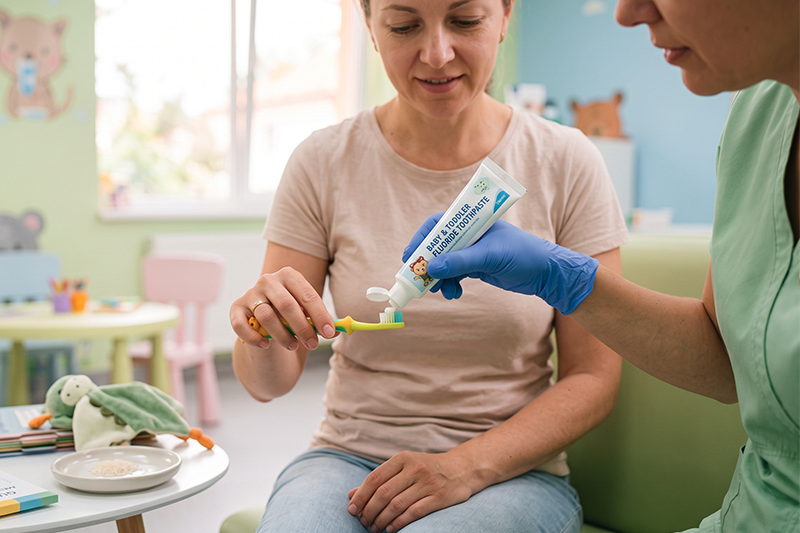 Parents often have questions about fluoride toothpaste and how much to use.
The appropriate amount depends on the child’s age and dental guidance.
For young children, only a small smear or rice-grain-sized amount of fluoride toothpaste may be recommended, depending on age and professional guidance.
Parents should supervise brushing and avoid allowing young children to use excessive amounts of toothpaste.
Your pediatric dentist can provide specific advice based on your baby’s age and individual dental needs.
Can Bottle Feeding Affect Baby Teeth?
Feeding habits can influence the risk of early childhood tooth decay.
The dentist may discuss
- Bottle feeding
- Breastfeeding
- Night-time feeding
- Sugary drinks
- Formula
- Introduction of solid foods
Frequent exposure to sugary liquids can increase the risk of tooth decay.
Parents should discuss night-time feeding and other feeding habits with their pediatric dentist, particularly once teeth begin to emerge.
What About Pacifiers and Thumb Sucking?
Pacifiers and thumb sucking are common soothing behaviours in babies and young children.
However, prolonged habits may influence the developing teeth and jaws in some children.
During the first dental visit, the dentist can discuss
- How often the habit occurs
- The child’s age
- Whether the habit is affecting dental development
- When and how to consider stopping the habit
Parents should not feel pressured to stop a normal soothing habit immediately. The dentist can provide age-appropriate guidance based on the child’s development.
How Can Parents Prevent Baby Bottle Tooth Decay?
Early childhood cavities can develop when teeth are frequently exposed to sugary liquids.
Parents can help reduce the risk by:
- Cleaning the baby’s teeth regularly
- Avoiding unnecessary sugary drinks
- Following appropriate feeding guidance
- Avoiding putting a baby to sleep with a bottle containing sugary liquids
- Scheduling regular dental visits
Even natural or added sugars can contribute to tooth decay when exposure is frequent.
What Should Parents Know About Teething?
Teething can cause temporary discomfort as new teeth emerge.
Some babies may experience
- Increased drooling
- Tender gums
- Irritability
- A desire to chew
- Changes in feeding behaviour
Parents can discuss appropriate ways to manage teething discomfort with their pediatric dentist.
If your baby develops significant swelling, fever, persistent symptoms, or appears unusually unwell, consult a healthcare professional rather than assuming that the symptoms are simply caused by teething.
Does a Baby Need Regular Dental Visits?
Yes. The first visit should be the beginning of regular preventive dental care rather than a one-time appointment.
Regular visits allow the dentist to monitor
- Tooth eruption
- Oral hygiene
- Tooth decay risk
- Jaw development
- Bite development
- Oral habits
The frequency of appointments will depend on your child’s oral health and individual risk factors.
Regular dental visits also help children become familiar with the dental environment, which may make future appointments easier.
What If My Baby Has a Cavity?
If the dentist identifies early tooth decay, they will discuss the most appropriate management option.
Treatment depends on factors such as
- The child’s age
- Location and severity of decay
- Symptoms
- Number of affected teeth
- Overall dental health
- The child’s cooperation
Early detection is valuable because small areas of decay may be easier to manage than advanced dental problems.
Parents should never wait for a baby to experience significant pain before seeking dental care.
What If My Baby Has No Teeth Yet?
A dental visit can still be useful even if your baby has not developed their first tooth.
The dentist can examine the gums and discuss
- Expected tooth eruption
- Oral hygiene
- Feeding habits
- Fluoride use
- Teething
- Pacifier habits
- Future dental visits
Starting early can help parents establish good oral-health routines before dental problems develop.
How Can Parents Make Dental Visits Easier as Their Child Grows?
Positive early experiences can influence how children feel about dental visits later.
Parents can help by
- Speaking positively about dental appointments
- Avoiding threatening dental language
- Establishing daily brushing routines
- Reading age-appropriate books about visiting the dentist
- Avoiding using dental visits as a punishment
- Staying calm during appointments
Children often take emotional cues from their parents. A relaxed approach can help create a more positive experience.
Common Questions Parents Ask About the First Dental Visit
Is it too early to take my baby to the dentist?
No. An early visit is recommended to establish preventive care and monitor oral development.
What if my baby only has one tooth?
That is still enough reason to schedule the first dental visit. The dentist can examine the emerging tooth and provide guidance on caring for it.
Does my baby need to brush before the appointment?
Continue your normal oral hygiene routine. There is no need to change your baby’s usual brushing routine before the appointment.
What if my baby cries?
Crying is common during early dental visits. Pediatric dental teams are trained to work with young children and can use appropriate techniques to make the experience more comfortable.
Can parents stay with their baby?
In many pediatric dental settings, parents can remain with their child. The dental team can explain how the appointment will be conducted and how parents can best support their baby.
Building Healthy Smiles Starts Early
 Your baby’s first dental visit is an opportunity to start building healthy habits that can last a lifetime. It is not simply about checking whether the first few teeth are healthy. It is about educating parents, monitoring development, preventing dental problems, and helping your child become comfortable with dental care.
By starting dental visits early, maintaining good oral hygiene, making informed feeding choices, and following professional advice, parents can give their children a strong foundation for lifelong oral health.
If your baby is approaching their first birthday or has recently developed their first tooth, consider scheduling their first dental examination.
At Dr Joy Dental Clinics, our pediatric dental team provides age-appropriate dental care in a child-friendly environment, with a focus on prevention, comfort, and healthy dental development. Call us today at 80037569 to book your baby’s first dental visit with our specialist pediatric dentists and take the first step towards a healthy, confident smile.


